

Summary
- Bitcoin recovered above $62,000 after slipping under $61,500, yet the broader structure stays bearish until the resistance cluster above $63,000 is reclaimed.
- Geopolitical pressures from U.S. strikes on Iran and upcoming Federal Reserve decisions are adding volatility without clear spot demand confirmation.
- Short-term leverage rebounds risk quick reversals, as ETF inflows and volume remain insufficient to confirm a sustained reversal from the June breakdown.
Bitcoin touched $64,400 overnight then eased back toward the $62,000 area. Prices sat near $62,323 after the latest round of U.S. strikes on Iran. A sharper dip below $61,500 hit earlier in the week, and that leaves a thin buffer between support and the next obvious barrier.
Bitcoin's rebound toward $63,000 shows short-term momentum. Yet resistance still caps the move until traders reclaim a decisive level. The broader structure stays bearish.
Price Action and the Resistance Wall
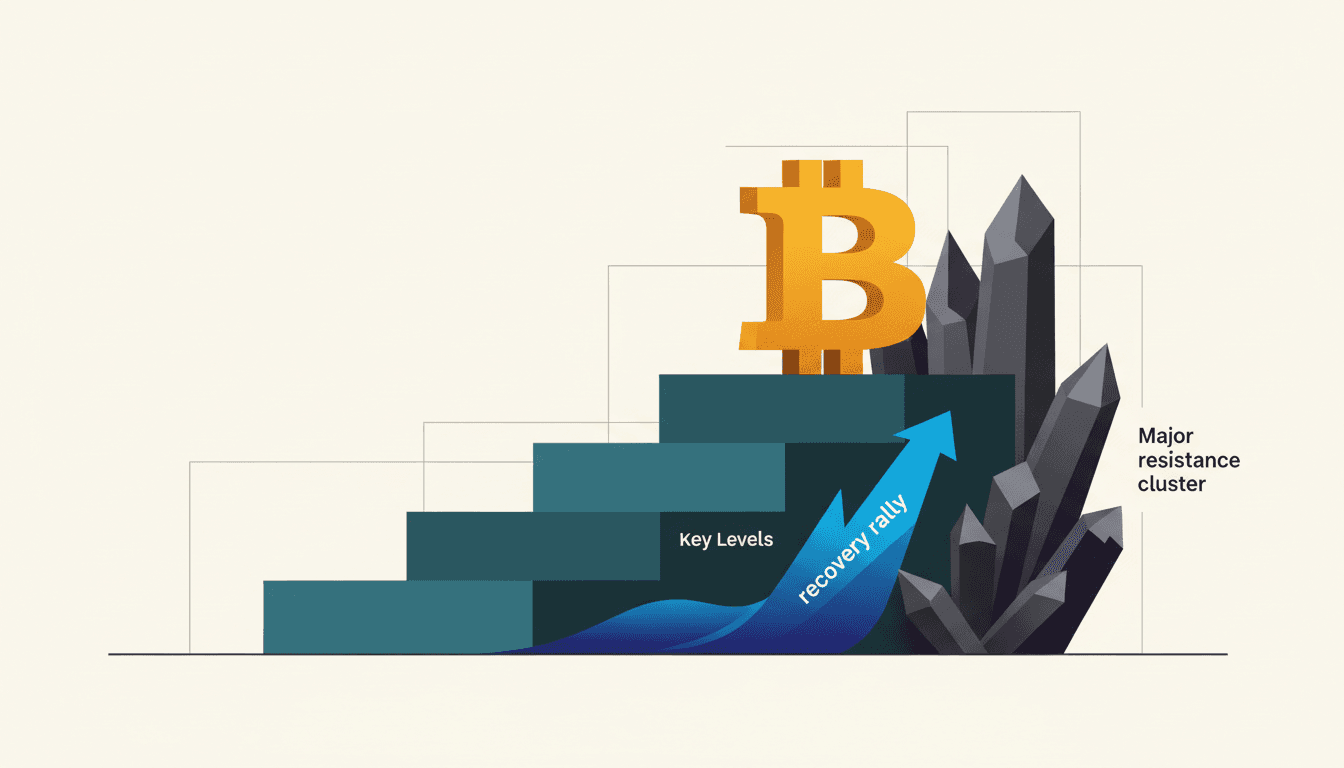
Bitcoin price action has stayed locked in a narrow band between the $61,000-$62,000 support zone and the overhead cluster that has capped every relief rally since June. The overnight spike to $64,400 got rejected quickly and returned the asset to the mid-$62,000 region. This pattern repeats the behavior seen in prior attempts to push higher after the breakdown.
- Key levels to monitor include the $63,000-$64,000 resistance band that has repeatedly turned price back lower.
- Support at $61,000-$62,000 has been tested multiple times without a decisive break.
- Volume and ETF flow data have not yet shown the acceleration needed to validate a larger reversal.
Until bitcoin price clears the resistance cluster on convincing volume, the bearish market structure identified after the June decline remains intact. Short-term traders may still chase the rebound. The higher-timeframe bias stays defensive.
Geopolitical and Macro Drivers
U.S. strikes on Iran have coincided with a spike in oil prices and broader risk-off sentiment across equities and crypto alike. Bitcoin slipped under $61,500 in the immediate aftermath before clawing back above $62,000. The same session saw Ethereum, XRP, Solana, and Dogecoin post modest losses, reflecting correlated selling pressure.
Traders are also positioning ahead of the next Federal Reserve policy statement. Futures markets show participants trimming risk, which has limited the upside follow-through even as leverage returns to the bitcoin rebound. This combination of geopolitical tension and policy uncertainty creates a backdrop where relief rallies can form quickly yet fade just as fast.
The current week therefore carries extra weight. Price action in the coming sessions will clarify whether the move from last week's low evolves into something more durable or simply sets up another test of the $61,000-$62,000 area.
"Bitcoin continues to recover from its recent sell-off, but the market remains trapped beneath a major resistance cluster that has capped every relief rally since the June breakdown."
, CryptoPotato (https://cryptopotato.com/bitcoin-price-analysis-btcs-structure-remains-bearish-until-this-key-level-is-reclaimed/)
Counterpoint: Leverage Without Spot Demand
Short-term leverage-driven rebounds can generate sharp upside spikes. They also embed volatility risk when spot demand and ETF inflows fail to confirm the move. The recent push toward $63,000 has relied partly on forced buying and renewed futures activity rather than sustained accumulation from longer-term holders.
This setup leaves the bitcoin rebound vulnerable to rapid unwinds if macro conditions deteriorate or if resistance holds once more. Without fresh capital entering through spot channels, any break above the cluster could prove fleeting. Analysts note that the $61,000-$62,000 support zone will remain the deciding factor for whether the relief rally has genuine legs.
By contrast, the absence of strong ETF flows during the rebound period suggests that institutional conviction has not yet shifted. That gap between leveraged positioning and real demand is the primary reason the market structure continues to be described as bearish until proven otherwise.
What the Data Suggests Next
The weight of evidence points to a market still in consolidation beneath a stubborn resistance band. Geopolitical headlines and policy caution have amplified swings without altering the core technical picture. While the bitcoin rebound has restored some short-term momentum, reclaiming the levels above $63,000 on meaningful volume is the threshold that would alter the bearish bias.
Looking ahead, the key question remains whether spot demand and ETF inflows accelerate enough to convert this relief move into a durable reversal, or whether the crypto market simply retests lower supports once leverage resets again. Which, if you've been watching this space, shouldn't be surprising.