

Happy Friday, and welcome new subscribers.
For years, investors treated the global energy system as something stable. Predictable. Almost boring.
Then geopolitics came roaring back.
From tensions around the Strait of Hormuz to renewed interest in Venezuelan crude… the world’s energy map is shifting again.
And if you’re paying attention, a very clear trend is emerging.
The United States is becoming the world’s energy shock absorber…
Regardless of how Iran and/or the Strait of Hormuz eventually turn out.
Let’s walk through what that means for investors.
The Hormuz Risk That Never Went Away
For decades, energy traders have worried about one scenario above all others:
Iran closing the Strait of Hormuz.
It’s easy to see why.
Nearly 20% of global oil supply moves through that narrow shipping lane between Iran and Oman.
Energy historian Daniel Yergin once described it simply:
“The Strait of Hormuz is the world’s most important oil chokepoint.”
Markets have taken that warning seriously for years.
Back in 2019, Jamie Dimon warned:
“If there’s a war in the Middle East or the Strait of Hormuz closes, oil could go to $100 to $150 a barrel.”
Others have gone even further.
Some analysts have modeled scenarios where a prolonged closure pushes oil toward $200 per barrel, triggering inflation shocks and potentially tipping the global economy into recession.
Whether those forecasts prove accurate or not… the message is clear.
Energy security matters again.
And that brings us to the United States.
America’s Shale Advantage
The U.S. shale boom fundamentally changed global oil markets.
Instead of relying heavily on imports, the U.S. is now one of the largest energy producers on Earth.
Several major publicly traded companies produce the vast majority of their oil inside the United States, particularly from regions like the Permian Basin.
Here are a few of the biggest:
EOG Resources (NYSE: EOG)
Approximately 95–98% of production in the U.S.
Devon Energy (NYSE: DVN)
About 90–95% U.S.-based production
Diamondback Energy (NASDAQ: FANG)
Essentially 100% Permian Basin production
Occidental Petroleum (NYSE: OXY)
Roughly 80–85% of production from U.S. assets
These companies sit directly on top of the most productive shale formations in North America.
Which means when global oil prices spike…
Their margins tend to spike with them.
The Texas Export Machine…
But drilling oil is only part of the story.
The real power lies in export infrastructure.
The Gulf Coast, particularly Texas ports, has quietly become one of the most important energy export hubs on Earth.
Major refiners operating there include:
Valero Energy (NYSE: VLO)
One of the largest exporters of gasoline and diesel from U.S. refineries.
Marathon Petroleum (NYSE: MPC)
Runs the massive Galveston Bay refining complex.
Phillips 66 (NYSE: PSX)
Operates the Sweeny refinery near Freeport.
ExxonMobil (NYE: XOM)
Operates major refining capacity in Baytown and Beaumont.
These refineries process crude oil and ship refined fuels across the globe.
But natural gas exports may be even more important.
LNG Is the New Energy Superpower…
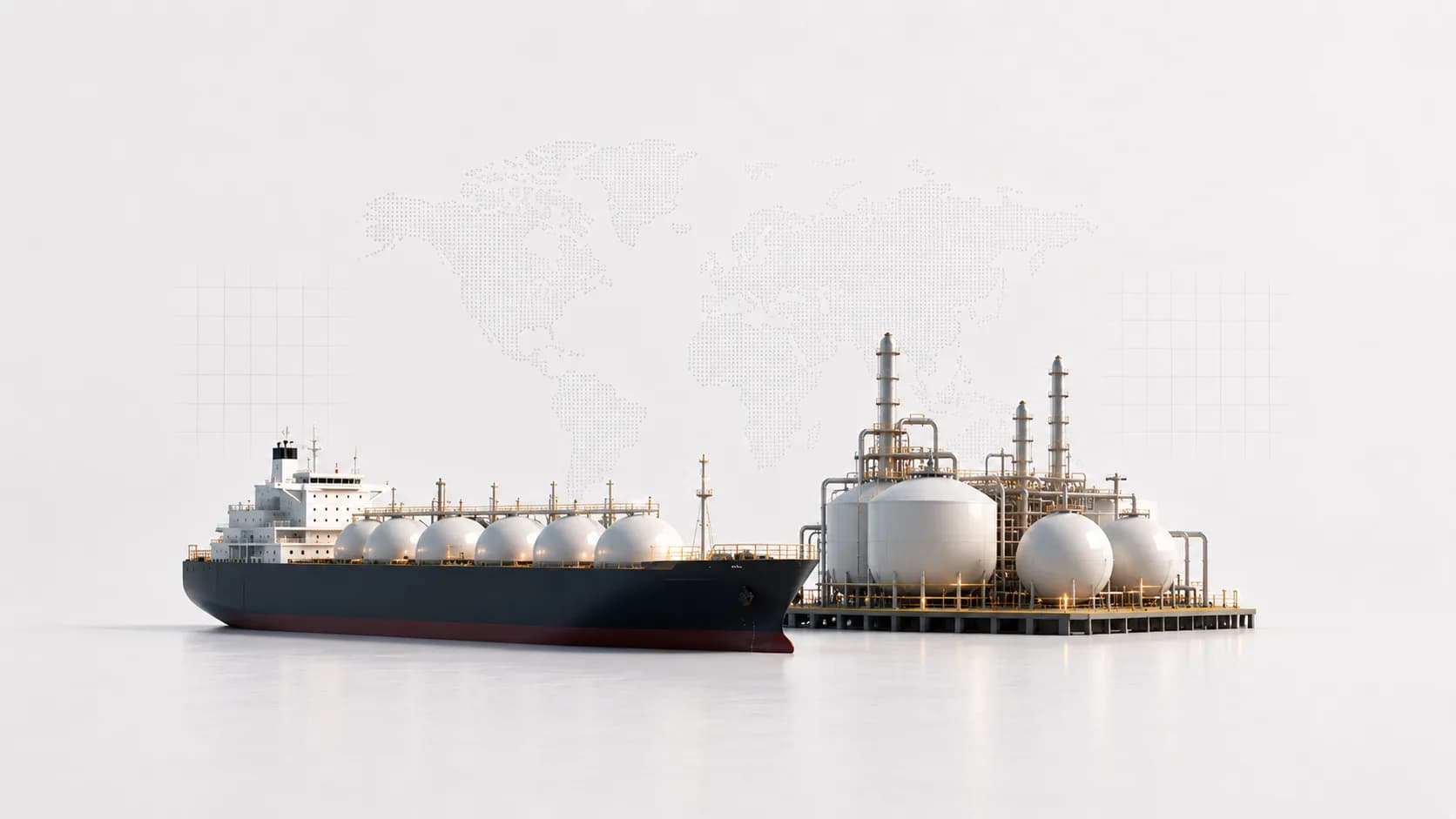
Over the past decade, the U.S. quietly became the world’s largest exporter of liquefied natural gas.
That transformation happened largely through Gulf Coast terminals like Corpus Christi and Port Arthur.
Key public companies involved include:
Cheniere Energy (NYSY: LNG)
The largest LNG exporter in the United States.
ExxonMobil (NYSE: XOM)
Partner in the Golden Pass LNG project with QatarEnergy.
These facilities convert natural gas into LNG, allowing it to be shipped worldwide.
Europe, Asia, and Latin America now depend heavily on these exports.
Venezuela: The Wild Card…
One more piece of the global energy puzzle is worth watching.
Venezuela.
The country sits on some of the largest oil reserves on the planet.
But years of sanctions, mismanagement, and nationalization crippled production.
Today, only one major U.S. oil company is actively producing there.
Chevron (NYSE: CVX)
Through joint ventures with Venezuela’s state oil company PDVSA, Chevron produces roughly 200,000+ barrels per day.
That makes Chevron the only U.S. oil major still producing crude inside Venezuela.
If the country’s oil sector fully reopens to Western investment someday, companies like:
- Chevron
- ExxonMobil
- ConocoPhillips
could potentially return in force.
And that could unleash one of the largest oil reserve developments in the world.
The Big Picture…
For most of the past decade, investors focused on technology stocks, AI, and digital assets.
Energy often took a back seat.
But the geopolitical reality is simple:
The world still runs on oil and natural gas.
And right now, the United States sits at the center of the global energy system.
From the Permian Basin to LNG terminals on the Texas coast…
America’s energy industry has become one of the most important strategic assets on Earth.
That’s something investors may want to keep in mind the next time oil markets start moving.
Because when geopolitical shocks hit…
Energy stocks are often the first to react.
Enjoy your weekend,
The Alpha Edge Digest